
Classical Study Method & GCSEs
The Story of Western Civilisation

From Antiquity to the Modern Era
At Jesus College, students follow a European classical method across English, History, Art, Philosophy, and Theology, modelled on the traditional Italian Liceo approach. These subjects are taught chronologically, beginning in antiquity and concluding in the modern era. By exploring major historical figures and foundational works, students analyse cultural developments within their broader political and social contexts. Because these subjects cover the same historical eras, their curricula closely intertwine to map the evolution of Western civilisation.
Students are introduced to a comprehensive timeline of pivotal events, literature, authors, artists, and techniques. This framework enables them to understand the major advancements, pitfalls, and masterpieces of each era, which they analyse firsthand through selected primary sources.
Through this approach, students gain a deep understanding of how Western civilisation evolved into the modern world. Throughout their studies, they trace the hand of God and observe how humanity has responded across millennia. Ultimately, this equips students to independently situate future literature and art within their proper historical narratives and genres, guiding their own lifelong learning.
Studying the Language of Rome
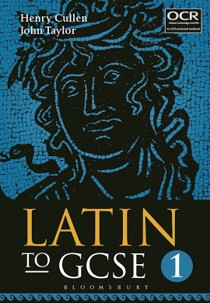
All students study Latin for at least one year, with the option to pursue it at GCSE and A-Level. The GCSE course features a significant study of classical Roman prose and literature, including Virgil’s Aeneid and Cicero’s writings on vice and virtue, in their original Latin language.
The GCSE course includes Virgil’s Aeneid and Cicero’s writings on vice and virtue, in their original Latin language.
Examinations Across the Trivium
To facilitate these classical studies alongside standard qualifications, we have structured our examination curriculum around the traditional Trivium: the Grammar (Memory), Logic (Data & Science), and Rhetoric (Analysis, Argument, and Persuasion) phases of education. Examinations are strategically spaced across these developmental stages.
-
Grammar
Memory2 x GCSEsModern Foreign Languages
-
Logic
Data & Science4 x GCSEsMathematics, Science, and ICT
-
Rhetoric
Analysis, Argument & Persuasion4 x GCSEsEnglish Language, English Literature, and Electives
A Pathway for Every Student
10 GCSEs by Age 16
Under this structure, academic students earn 10 GCSEs by age 16 but experience a far less stressful workload during the traditional exam years.
This pacing frees up ample time to extend their classical studies into the first year of A-Levels.
Fewer GCSEs, Taken Later
For less academic students, the curriculum is tailored to fewer GCSEs, taken at a later stage. We firmly believe it is better to achieve four or five good GCSE passes than to attempt nine and receive minimal useful grades.
This pathway similarly shields students from the intense stress of the final exam years, allowing them to remain fully engaged in classical studies, which, though unexamined, provide invaluable knowledge for life.
By distributing GCSE examinations across different age milestones, our students routinely achieve higher grades than they would if sitting nine or ten exams all at once.